Sea/ by Maritech
Complex SaaS for Maritime Operations
Context
Sea/ by Maritech (a subsidiary of Clarksons PLC) builds SaaS products for the shipping industry. I owned UX design across two core products simultaneously, each with its own users, domain complexity and technical constraints.
Maritime shipping is a highly specialised domain. Users manage contracts worth millions through processes that had historically lived in emails, spreadsheets and phone calls. The challenge wasn't just designing good interfaces — it was understanding the domain deeply enough to know what "good" meant for these users.
Sea Ops
Tracks vessel progress, delays, costs and P&Ls for shipping operations
Sea Contracts
Supports bi-party contract negotiation, recording and approval workflows
Year 1: The COA Feature
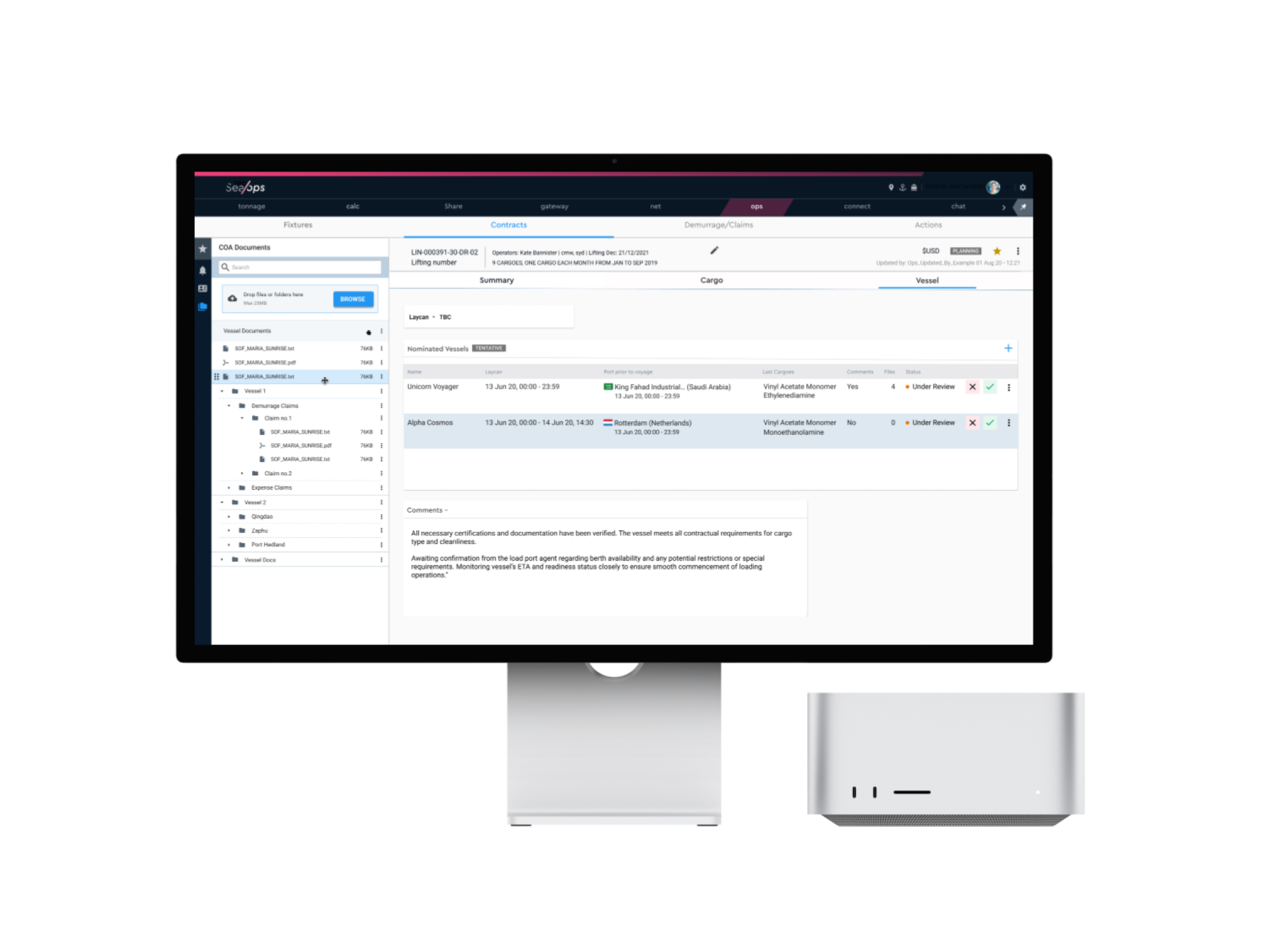
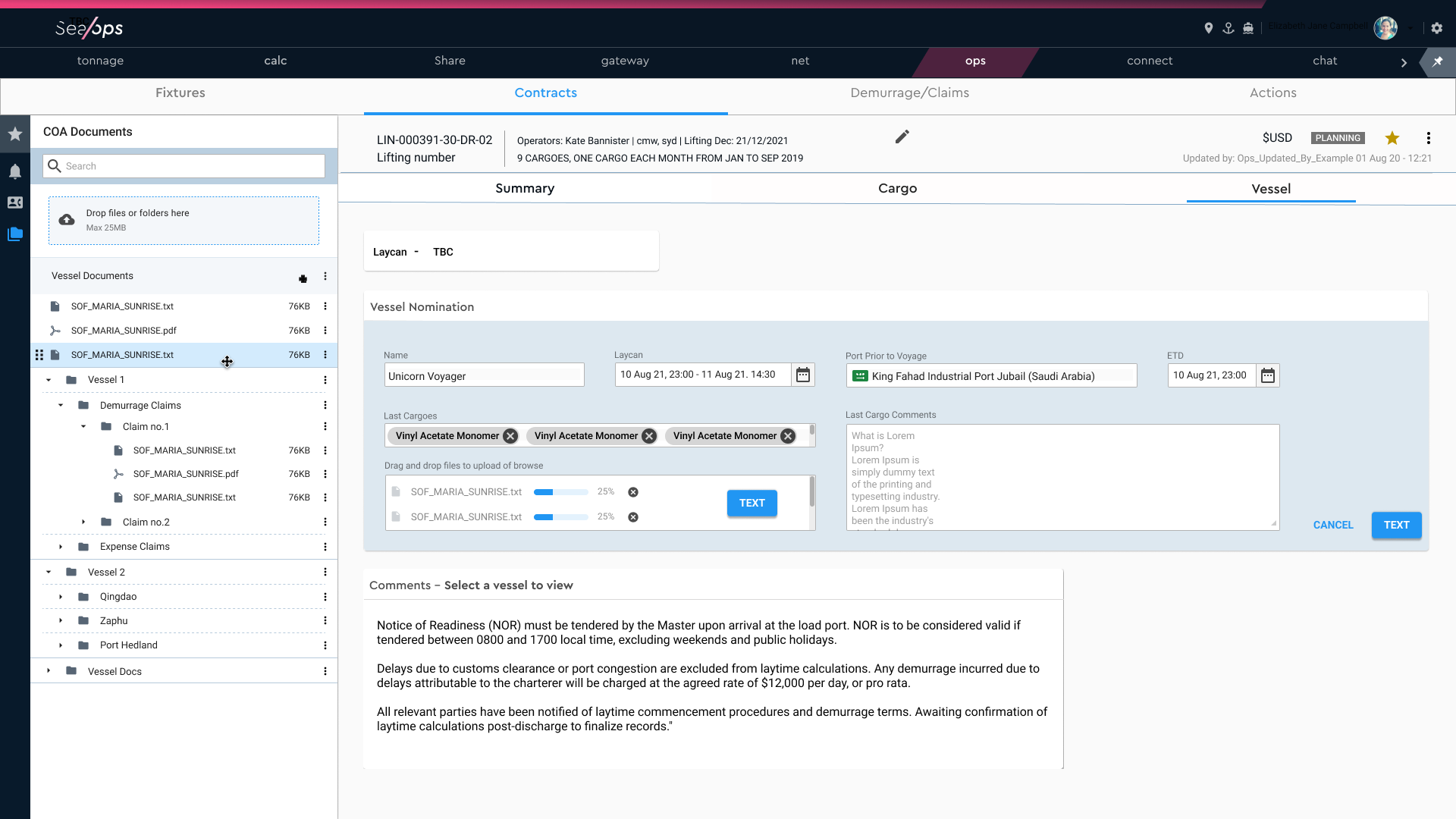
A year-long, end-to-end project to build the flagship addition to Sea Ops — enabling users to record and track Contract of Affreightment fixtures over time.
Discovery
With direct access to users and business stakeholders through Clarksons, I ran structured discovery to understand how COA fixtures were currently managed. The answer: emails, spreadsheets and institutional knowledge. No single source of truth.
The SIAS Framework
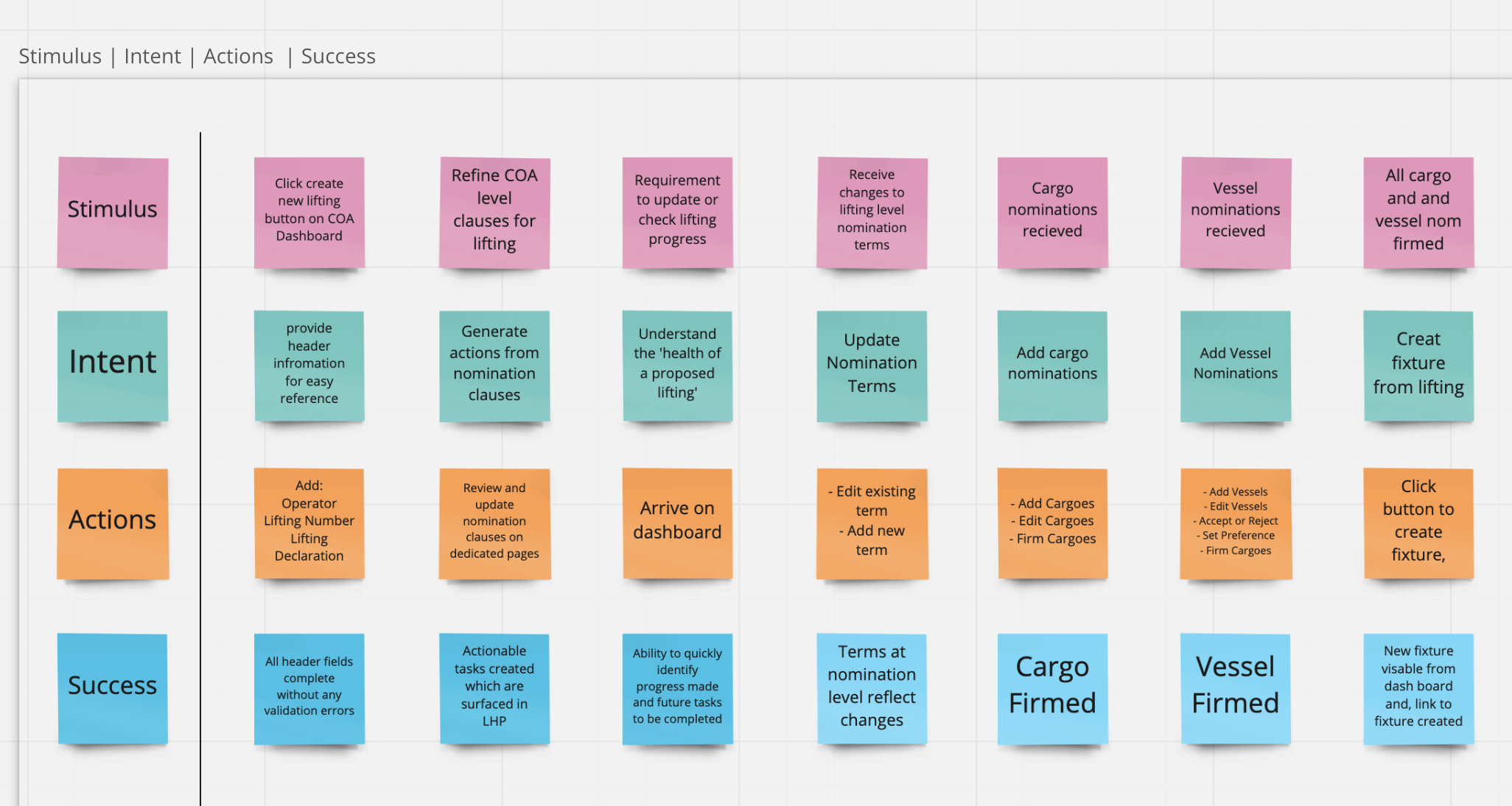
I introduced a framework to define each step of the journey with clarity, removing ambiguity in a domain where the same term could mean different things to different users:
What triggers the user to interact with the system
What they're trying to achieve at that point
What inputs and interactions are needed
What completing that step looks like
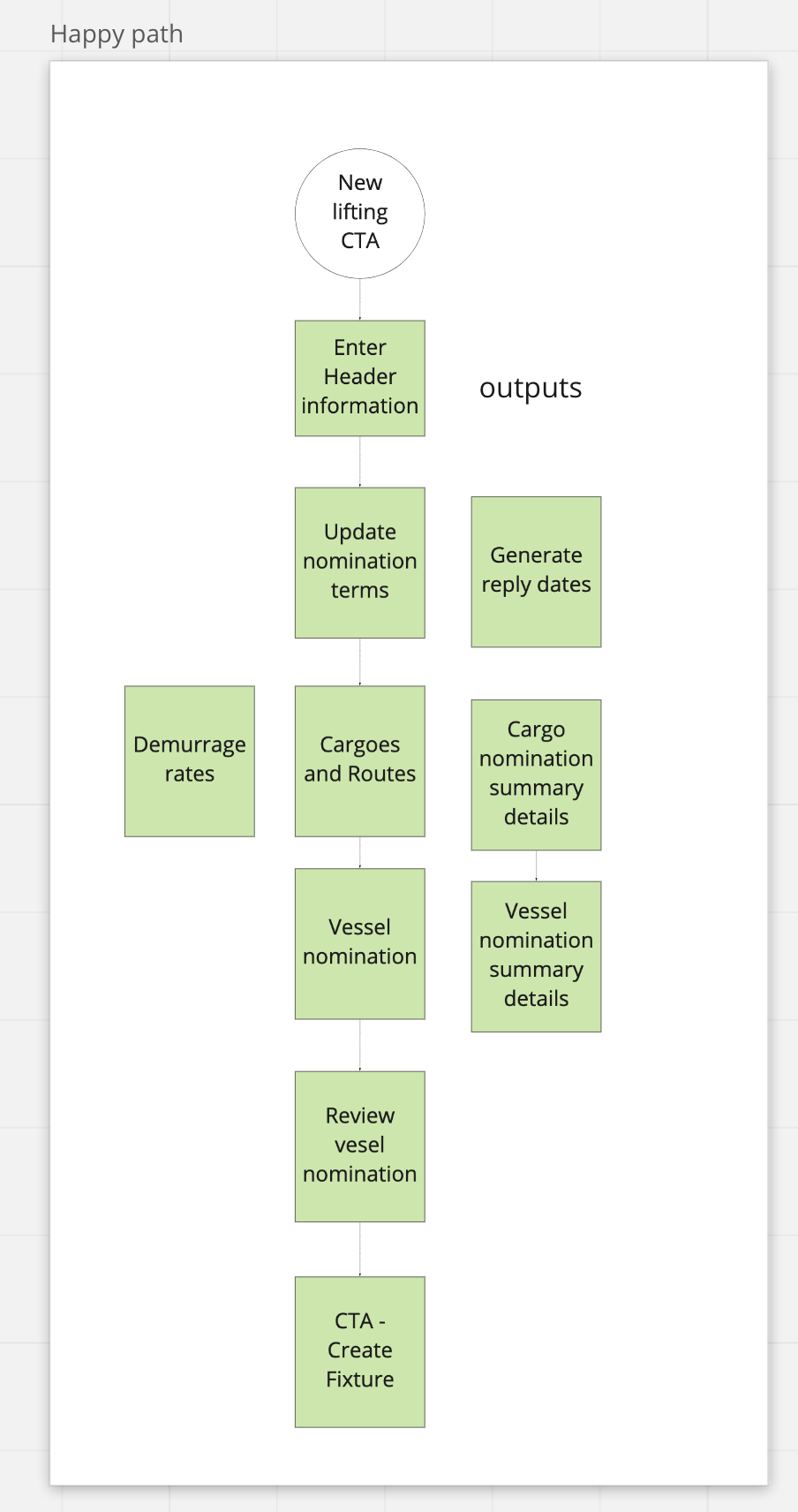
Information Architecture
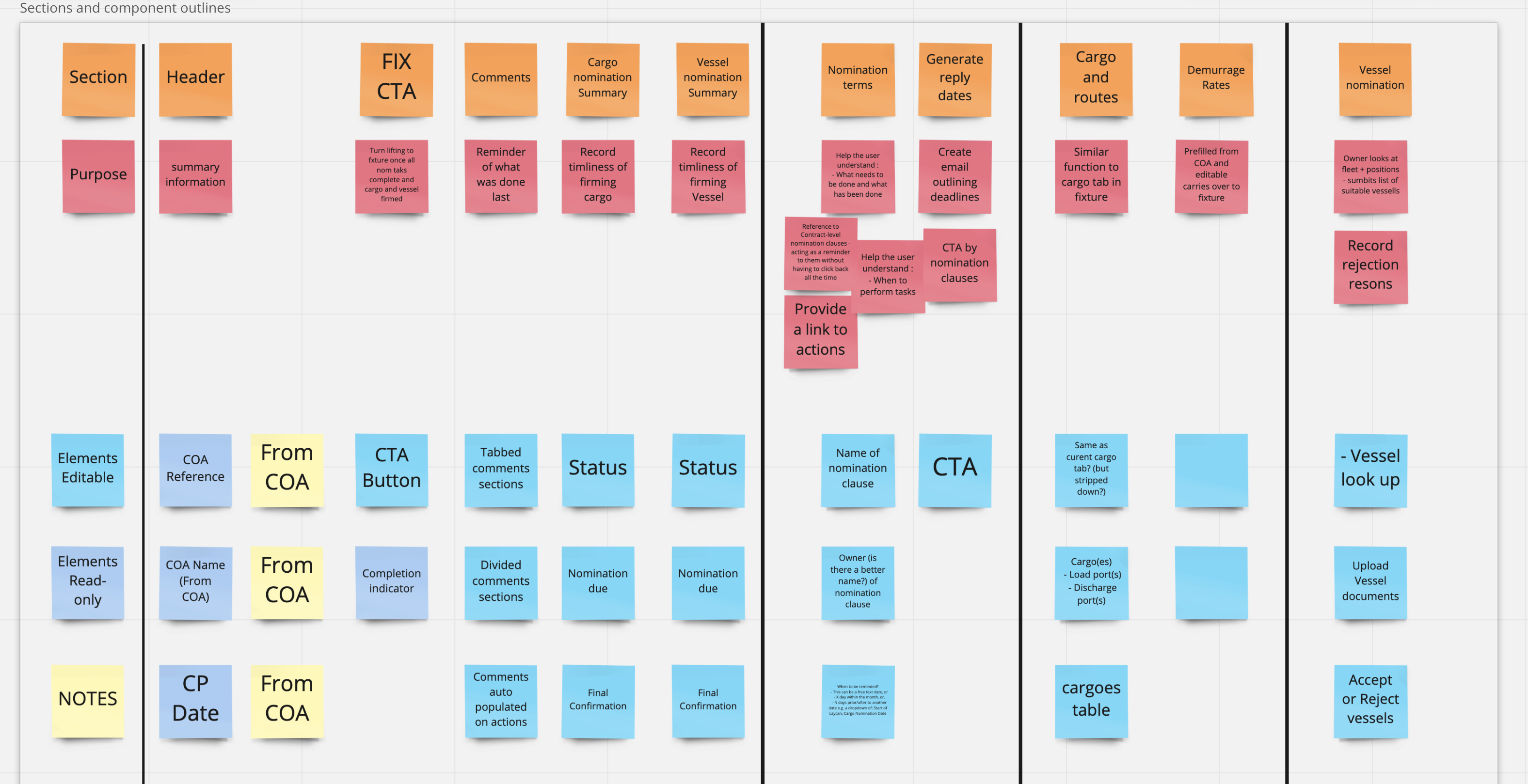
After defining actions for all paths, I built the information architecture — grouping related components, organising them into sections, and writing clear intentions for each section to ensure data was structured purposefully.
Technical Collaboration
Worked with engineering leadership to shape how an event-driven architecture would surface real-time vessel, delay and cost data in the UI. This required understanding the technical trade-offs and influencing the architectural approach.
Year 2: Sea Contracts Redesign
After delivering the COA feature, I moved to Sea Contracts — joining at the start of an R&D cycle. The history and audit sections had grown organically around legacy code and couldn't handle the reality of maritime contracts: multi-stage edits, negotiation back-and-forth, and complex approval flows.
I researched and mapped real-world contract processes with customers, domain experts and compliance teams. Then redefined the audit and history model to support multi-stage workflows — working within the constraints of the existing codebase.
Outcome
What This Demonstrates
- Deep domain complexity — learning a highly specialised industry, earning user trust, and designing for expert workflows worth millions per transaction.
- End-to-end ownership — discovery, IA, interaction design, and technical collaboration across two simultaneous products over 2+ years.
- Framework introduction — SIAS gave the team a shared language that removed ambiguity in an ambiguous domain.