Travelex
goTaxFree: Research That Changed a Product
Led design on a greenfield start-up inside Travelex to digitise the UK VAT refund process. Research experiments revealed a fundamental misunderstanding about what users valued — which changed how the entire product was positioned.
Context
The UK VAT refund process for non-EU tourists has long been criticised for its inefficiency — paper forms, manual processes, long airport queues. Travelex saw an opportunity to digitise this and create a new revenue stream.
goTaxFree was set up as a start-up inside Travelex: small agile team, greenfield product, high autonomy. I owned end-to-end design across native iOS/Android apps, a retailer-facing web app and supporting internal tools. I defined the design approach, research plans, success metrics and early design system foundations.
The Three Solutions
Retailer Pilot (Oliver Bonas)
Web app for VAT e-receipts, online registration, fast-track airport passes and digital refund claims. Validated the core proposition in a real retail environment.
goTaxFree App
Native iOS/Android apps enabling tourists to digitise receipts, auto-generate VAT forms and complete claims in-app. Replacing the entire paper workflow.
API & Partnerships
API development and partner integrations (including China Union Pay) to extend the service to a wider tourist base.
The Research That Changed Everything
This is the part of the project I'm most proud of. Two experiments that fundamentally shaped the product's direction.
Experiment 1: Preference Test
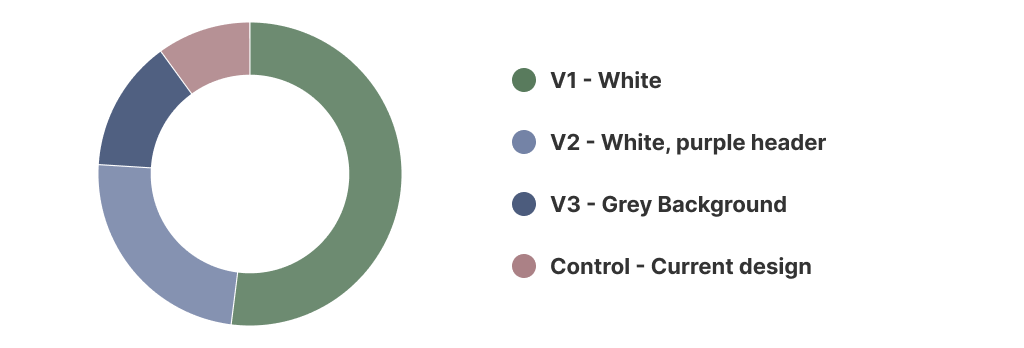
Tested four design variations of the receipts dashboard with 42 participants, randomising presentation order to avoid bias.
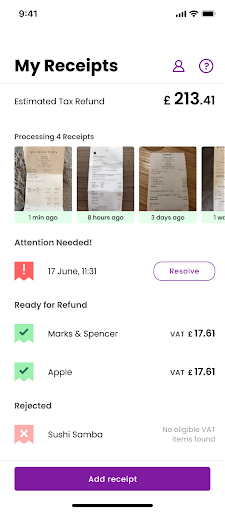
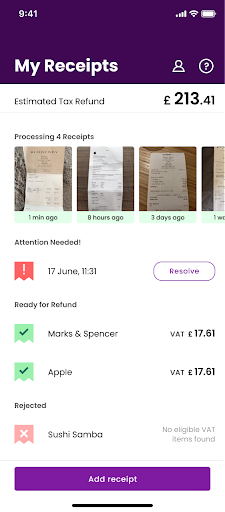
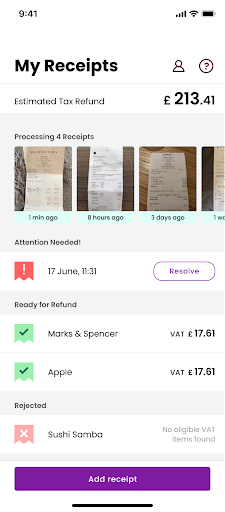
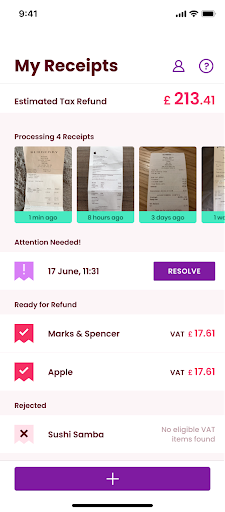
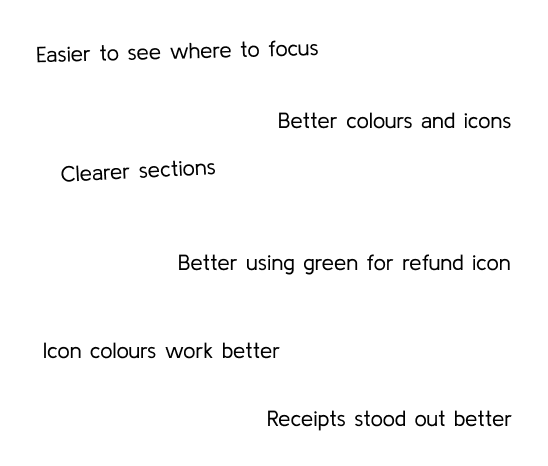
But the quantitative data was only part of the story. Four follow-up questions revealed the why — combining quantitative preference with qualitative depth to identify actionable insights.
Experiment 2: The Pivotal Role-Play
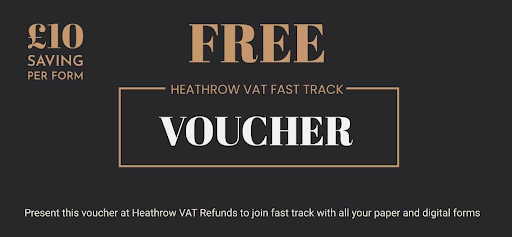
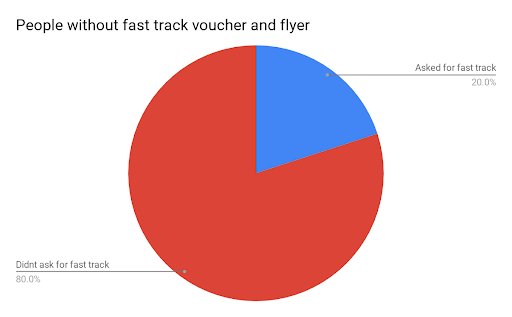
We hypothesised that giving users a physical voucher for the fast-track airport queue would increase conversion. We ran a role-play of the shopping-to-airport experience, giving half of participants vouchers and half nothing.
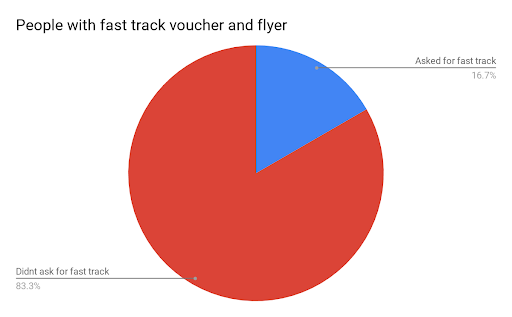
What we learned:
The Strategic Shift
This experiment changed the product's entire positioning.
Process-centric: "Here's how to claim your refund"
Benefit-centric: "Save time at the airport"
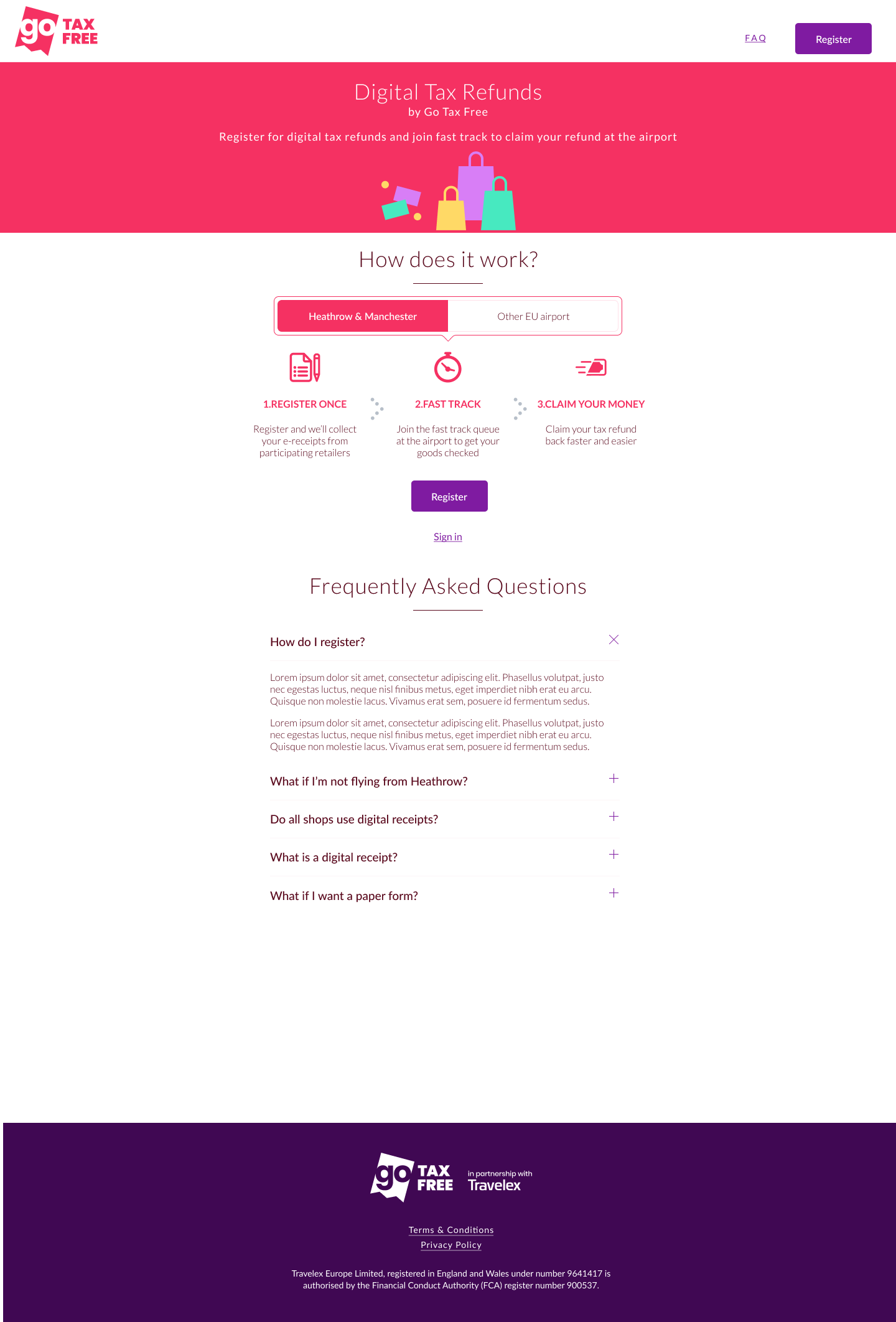
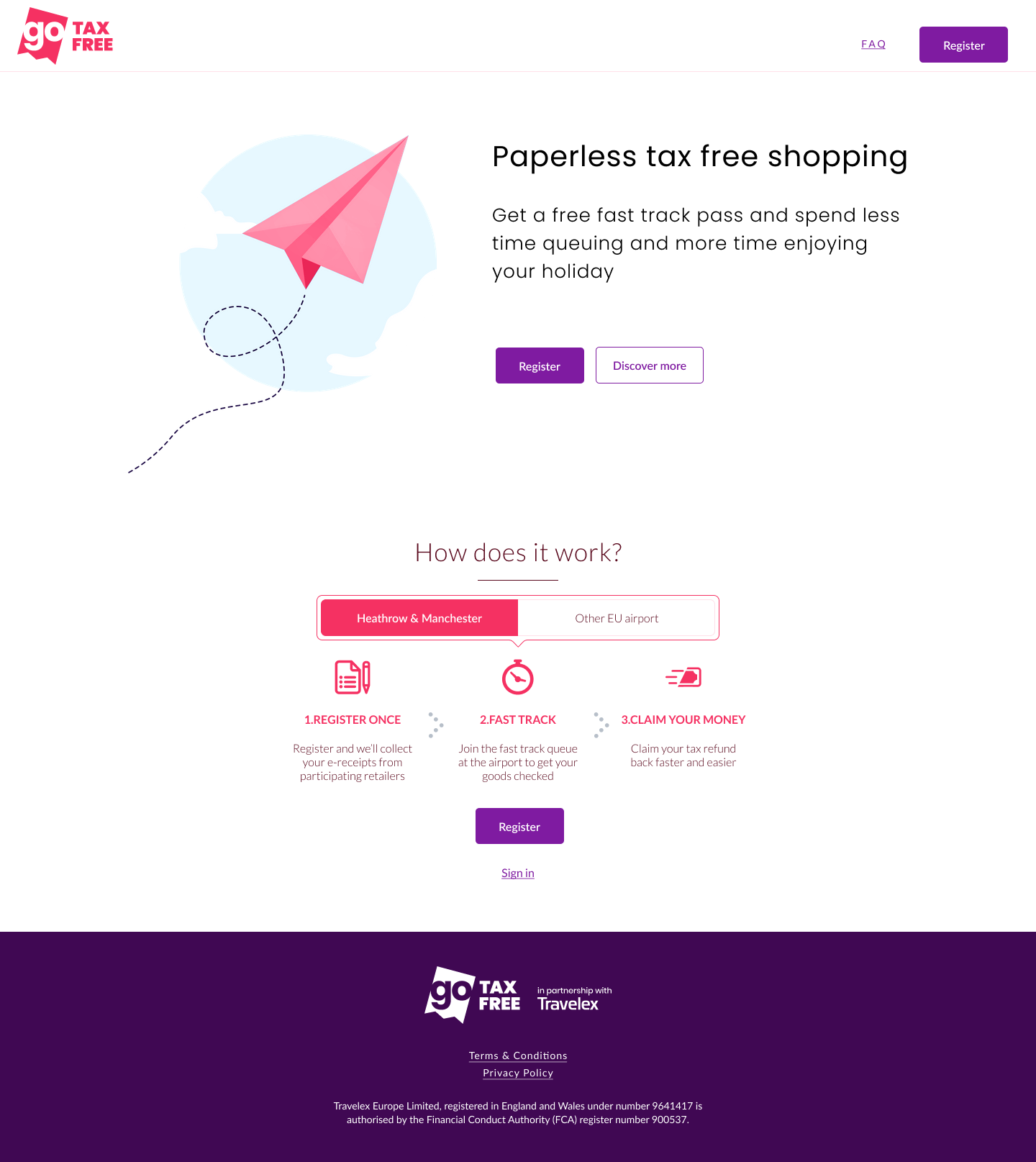
The fast-track offer became the lead proposition. This directly shaped how we approached the retailer pilot website — moving away from process explanations and FAQs toward a simpler landing page focused on the time-saving benefit.
What This Demonstrates
- Research that drives strategy — not just validating designs, but discovering the insight that changed how the entire product was positioned and sold to retail partners.
- Tax/fintech domain — VAT refund regulation, HMRC compliance requirements, and cross-border financial flows. Designing for a regulated process where getting it wrong has legal consequences.
- Greenfield founding-designer role — sole designer across native apps, web app, retailer tools, research planning, success metrics, and early design system foundations. Defined the role itself.
- Validated retail pilot — the Oliver Bonas pilot used these designs to prove the proposition in-market, directly informing the business case for further investment.